








AIDEVI Wellness Guide
When to Take Ergothioneine: Morning, Night or With Food?
There is no proven universal best time to take ergothioneine. Human studies have used morning schedules, and some have paired a dose with food, but they have not shown that morning is better than night or that food improves supplement absorption. Follow your product label and choose a routine you can keep comfortably.
If you searched for the ergothioneine best time or the best time to take ergothioneine, the most accurate answer is that timing is still an open question. The practical choice depends on the product directions, your tolerance, and the routine that helps you remember it.

In this guide
Is there a best time to take ergothioneine?
Current human evidence does not identify a time of day that works best for everyone. The available trials studied daily use over weeks or measured uptake after a course of supplementation; they were not designed to compare the same ergothioneine dose in the morning and at night. So "morning" is a study schedule in some papers, not a proven advantage.
That distinction matters because a study protocol answers, "When did these participants take it?" A timing trial would need to compare morning with evening under otherwise similar conditions and measure outcomes that could reveal a difference. A food comparison would similarly need fed and fasted groups or a crossover design. The studies below do not provide those head-to-head answers.
Morning or night: what do ergothioneine studies show?
Human studies have used different schedules, but a chosen schedule is not a test of whether that time is optimal. The table summarizes five intervention protocols that help answer what has been studied - and where the morning, night, and meal comparisons are still missing.
A later study of 28 adults also instructed participants to take their capsules in the morning, with afternoon use allowed when needed. Again, the study compared doses and tracked ergothioneine levels; it did not randomize people to morning versus evening schedules.[3]
Human studies relevant to timing and meals
| Study and participants | Dose, schedule, and what timing can be inferred |
|---|---|
| Cheah et al. (2016) 45 healthy men aged 21-35; randomized, double-blind, placebo-controlled, with 15 participants per group.[1] |
The EGT groups took 5 mg/day or 25 mg/day every morning for 7 days; blood and urine were followed through day 35. This was an uptake study. There was no evening arm or fed-versus-fasted supplement comparison. |
| Katsube et al. (2022) 92 Japanese volunteers aged 40-75 who reported anxiety and sleep complaints; randomized, double-blind, parallel-group study.[2] |
Participants took 20 mg/day or placebo for 4 weeks. Researchers assessed sleep questionnaires and EEG measures. The study did not compare morning with bedtime, or taking the capsule with food versus without food. |
| Okumura et al. (2025), Study 1 28 healthy adults aged 30-59 in a randomized, double-blind pharmacokinetic study.[3] |
Participants received 5 mg/day or 10 mg/day for 8 weeks. Instructions specified morning use, with afternoon use allowed if morning was not possible. The study tracked blood levels; it did not compare the two times. |
| Okumura et al. (2025), Study 2 100 adults randomized to EGT or placebo; 99 completed the trial.[3] |
The EGT group took 8 mg/day for 16 weeks. The paper reports subjective sleep outcomes, but this was not a morning-versus-night or with-food-versus-empty-stomach comparison. |
| Zajac et al. (2025) 147 adults aged 55-79 with subjective memory complaints in a randomized, double-blind, placebo-controlled trial.[4] |
Participants were instructed to take one capsule daily with food in the morning for 16 weeks; capsules supplied 10 mg or 25 mg EGT, or placebo. Because there were no alternate meal or time groups, this is a protocol detail, not proof that morning or food is better. |
How to read the table: a published schedule tells you what participants were asked to do; it does not show that the schedule caused the result. The morning regimens were not tested against otherwise identical evening regimens, and the study with a morning meal instruction did not include a no-food group. The sample sizes, doses, and durations describe research protocols, not recommendations for readers. A direct timing study would compare the same EGT preparation and amount at different times; a food study would compare the same capsule with and without a meal while controlling the rest of the routine. Until then, the best clock time and meal condition remain unestablished.
What about taking ergothioneine at night? A 2022 randomized, placebo-controlled study examined sleep after participants with reported anxiety and sleep complaints took 20 mg daily for four weeks. The study reported improvements in some sleep measures, but it was not a bedtime-versus-morning trial. A 2025 study also reported subjective sleep outcomes after daily use over 16 weeks; it likewise did not test whether bedtime dosing was responsible for the results.[2][3]
These findings do not establish ergothioneine as a sleep aid, nor do they show that you should take it before bed. The study outcomes need to be interpreted in the context of their participants, doses, duration, and study design. If you are curious whether a particular time suits you, follow your product label and discuss persistent sleep concerns with a healthcare professional rather than changing a supplement schedule to treat them.
The 2022 trial enrolled people who already reported high anxiety and sleep complaints, while the later study evaluated a different daily regimen over a longer period. Those details shape what the results mean for readers. Neither study assigned one group to take EGT at bedtime and another group to take it in the morning, so they cannot tell us whether the clock time influenced sleep scores. A sleep outcome is not the same as proof of a bedtime effect.[2][3]
Should you take ergothioneine with food or on an empty stomach?
Research has not established that an ergothioneine capsule must be taken with food or that an empty stomach improves its absorption. None of the human supplement studies in the table directly compared fed and fasted use. The trial with a morning meal instruction documents one protocol; it does not show that the meal or morning timing changed the outcome.[4]
Ergothioneine is also found in foods, including mushrooms, but that does not answer whether a supplement capsule is absorbed differently with a meal. Food sources, capsule formulations, and supplement timing are separate questions. Avoid assuming that a nutrient's transport mechanism proves a particular meal strategy is more effective.
This distinction also matters when you read about ergothioneine from mushrooms. Human food studies have examined ergothioneine supplied by mushroom meals; they address whether food can provide EGT, not whether a separate supplement capsule is absorbed better when swallowed alongside breakfast or dinner.[5] A result about dietary EGT should not be presented as a fed-versus-fasted supplement result.
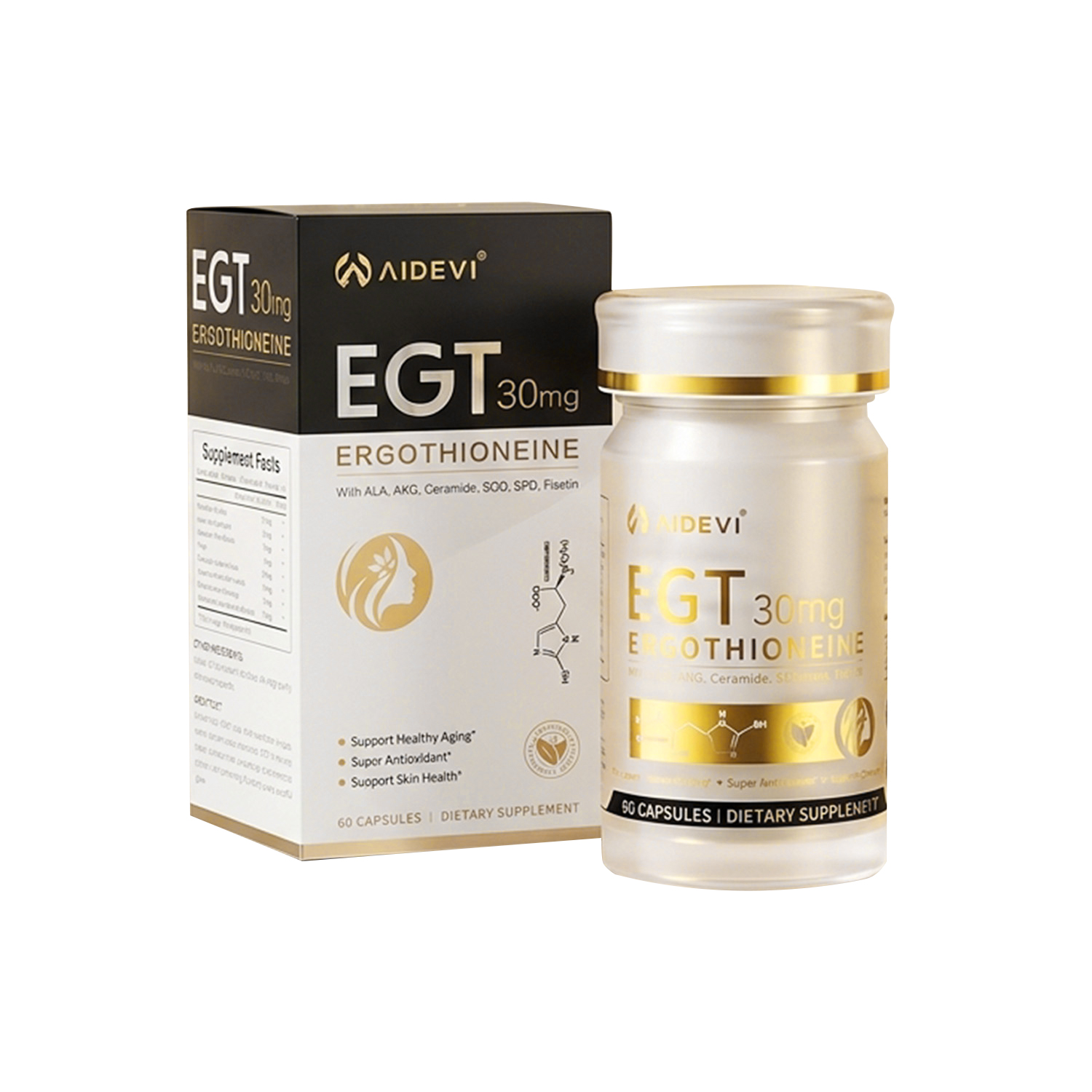
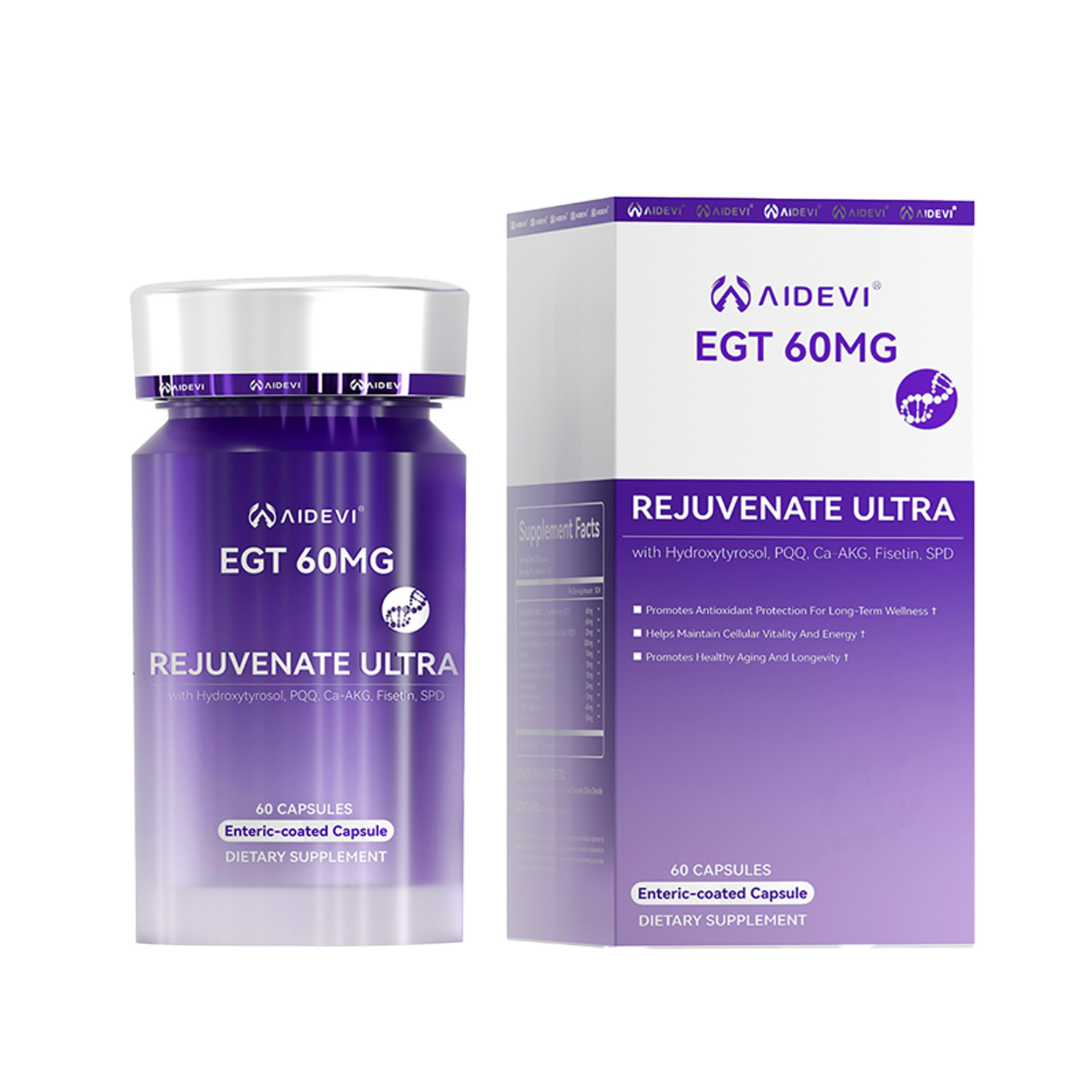
Use the directions on your specific bottle first. Some formulas combine ergothioneine with other ingredients, and their label instructions may reflect the full formula rather than ergothioneine alone. If your directions allow flexible timing and a supplement feels uncomfortable on an empty stomach, ask a healthcare professional whether taking it with food is appropriate for you. AIDEVI's ergothioneine dosage and label guide explains how to check serving size, directions, and other ingredients.
Does the time of day change the right serving size?
Timing and serving size answer different questions. A trial that used a morning schedule does not show that its amount is right for every person, and choosing an evening routine does not mean you should change the serving. Ergothioneine studies have used different preparations, populations, and study durations, so their amounts should not be treated as interchangeable directions for a supplement you buy.
Start with the product's Supplement Facts panel and directions: check how many capsules make one serving, how much EGT is listed per serving, what other active ingredients are included, and whether use is daily or otherwise specified. Do not take an extra serving because you missed your usual time or to imitate a research protocol. If the label is unclear, ask the manufacturer or a healthcare professional before changing use.
How can you choose a practical ergothioneine routine?
When there is no proven timing advantage, convenience and label directions are sensible starting points. A routine that fits your day may be easier to remember, but that is a behavior tip - not evidence that a specific hour improves ergothioneine's effects.
| Your situation | Practical next step |
|---|---|
| The label names a time or says to take it with food. | Follow the product directions; the research table does not override a product-specific label. |
| The label permits flexible timing. | Choose a repeatable cue in your day that helps you remember the serving. |
| You notice stomach discomfort. | Record the product and circumstances, then ask a healthcare professional whether a meal-time adjustment is appropriate. |
| You are changing timing because of sleep concerns. | Do not assume the sleep studies prove bedtime is best; discuss ongoing sleep problems with a clinician. |

- Check the whole formula. Verify serving size, amount per serving, added active ingredients, and any label-specific food or timing directions. A blend may have instructions that do not apply to EGT by itself.
- Keep the serving label-led. Trial amounts are not personal recommendations and may involve another population, formula, or research purpose. Do not take an extra serving because you missed your usual time or to imitate a study.
- Track tolerance, not presumed efficacy. If you are troubleshooting discomfort, record the product, serving, time, meal, and other changes such as a new supplement or medication. These notes can help a clinician assess the pattern; they cannot prove that one time works better.
For a wider ingredient overview, see AIDEVI's L-ergothioneine science guide. If your question is about potential reactions or medication use, review the ergothioneine safety and side-effects guide and get individualized advice.
Frequently asked questions
Can I take ergothioneine at night?
A specific bedtime benefit has not been established. Sleep studies assessed outcomes during daily ergothioneine use, but did not compare a night dose with a morning dose. Follow your label and choose a time that fits your routine.
Can I take ergothioneine on an empty stomach?
Available human studies do not establish that an empty stomach is necessary or superior. Check the directions for your exact product. If you experience discomfort, ask a healthcare professional whether taking it with food is suitable.
Does taking ergothioneine at the same time each day matter?
There is no established "same hour" rule for better results. A repeatable cue can help you remember a label-directed serving, but consistency as a reminder strategy should not be confused with proof that morning or night is more effective.
Can ergothioneine make you sleepy or keep you awake?
The available sleep studies do not establish whether EGT makes people sleepy, feels stimulating, or works differently by time of day. If you notice a change after starting a formula, record the time, serving, food, other ingredients, and any other routine changes. Ask a healthcare professional if the change persists or concerns you.
Can I switch my ergothioneine from morning to evening?
If your product directions allow flexible timing, there is no established evidence that one of those times is superior. Follow the label, keep the serving unchanged, and choose a schedule that is easy to remember. Check with a clinician or pharmacist before changing a multi-ingredient product routine if you take medication or manage a health condition.
A simple way to decide
For most readers, the practical answer to "morning, night, or with food?" is: follow the product label, select a comfortable time you can remember, and do not assume that bedtime or a meal creates a special benefit. Direct studies comparing those choices are still needed.
Consult a healthcare professional before starting or changing a supplement, especially if you are pregnant, nursing, taking medication, or managing a medical condition.
References
- [1] Cheah IK, et al. "Administration of Pure Ergothioneine to Healthy Human Subjects: Uptake, Metabolism, and Effects on Biomarkers of Oxidative Damage and Inflammation." Antioxidants & Redox Signaling. doi:10.1089/ars.2016.6778.
- [2] Katsube M, et al. "Food-derived antioxidant ergothioneine improves sleep difficulties in humans." Journal of Functional Foods. 2022;95:105165. doi:10.1016/j.jff.2022.105165.
- [3] Okumura H, et al. "Estimation and Validation of an Effective Ergothioneine Dose for Improved Sleep Quality Using Physiologically Based Pharmacokinetic Model." Food Science & Nutrition. 2025;13(6):e70382. doi:10.1002/fsn3.70382.
- [4] Zajac IT, et al. "The Effect of Ergothioneine Supplementation on Cognitive Function, Memory, and Sleep in Older Adults with Subjective Memory Complaints: A Randomized Placebo-Controlled Trial." Nutraceuticals. 2025;5(3):15. doi:10.3390/nutraceuticals5030015.
- [5] EFSA Panel on Dietetic Products, Nutrition and Allergies. "Safety of synthetic L-ergothioneine (Ergoneine) as a novel food." EFSA Journal. 2016;14(11):4629. doi:10.2903/j.efsa.2016.4629.
These statements have not been evaluated by the Food and Drug Administration. This product is not intended to diagnose, treat, cure, or prevent any disease.
