








AIDEVI Wellness Guide
Liver Health Supplements: Ingredients, Evidence & Safety
There is no single “best” liver health supplement for everyone, and a product marketed for detox or liver support is not proven to cleanse, repair, or treat the liver. Human evidence varies by ingredient and extract; safety, medication interactions, and the amount actually listed on the label matter just as much as a product’s headline claim.

Illustrative lifestyle photography. It does not show a tested product or a health outcome.
- Evidence for popular ingredients such as milk thistle is mixed or too limited for a clear conclusion about liver disease.
- Some concentrated herbal products have been linked with liver injury, so “natural” does not mean risk-free.
- Check the full Supplement Facts panel, not only the front label or a proprietary-blend name.
What can a liver health supplement realistically do?
A supplement may provide a nutrient or botanical that has been studied for a specific question, but that does not make it a general liver cleanse. “Detox,” “repair,” and “liver support” are broad marketing phrases; they do not tell you which outcome was measured, who was studied, or whether the formula has been shown to improve a health outcome.
This distinction matters because research can measure very different things: a blood marker, an imaging result, symptoms, or outcomes such as disease progression. A change in one marker does not automatically show that a supplement prevents liver disease or reverses damage. For a diagnosed condition, the useful question is whether a clinician recommends a particular ingredient for that condition and whether it fits your care plan.
The American Association for the Study of Liver Diseases (AASLD) also notes that herbal and dietary supplement products can themselves cause drug-induced liver injury. The reported risk is not the same for every product or user, but it is a reason to discuss supplements with a clinician rather than adding several products at once. [1]
How strong is the evidence for common liver supplement ingredients?
The table below separates frequently marketed ingredients from what human evidence can currently support. “Limited” does not mean an ingredient can never be useful; it means the available studies do not establish a reliable benefit for everyone or for every liver condition.
| Ingredient commonly marketed | What human evidence says | Practical reading |
|---|---|---|
| Milk thistle / silymarin | Trials in alcohol-related liver disease, hepatitis B or C, fatty liver, and other settings have been conflicting or too limited for firm conclusions. Two NCCIH-funded trials did not find benefit for hepatitis C or nonalcoholic steatohepatitis. [2] | Do not assume “traditional use” proves treatment benefit. Supplement content and product quality can vary. |
| Turmeric / curcumin | Turmeric used in food is different from concentrated supplements. NCCIH reports digestive side effects and cases of liver injury with some curcumin products formulated for increased absorption. [3] | Pay attention to formulation and added absorption enhancers; higher absorption does not automatically mean better or safer. |
| Green tea extract | AASLD describes reported cases of liver injury linked to green tea extract, including rare severe outcomes. This is a safety signal for concentrated extract products, not a claim that ordinary brewed green tea carries the same risk. [1] | Do not treat a “fat burner” or multi-ingredient blend as a liver-protection product because it contains tea-derived compounds. |
| Multi-ingredient blends | Evidence for one ingredient cannot be transferred to a blend with a different extract, dose, combination, or population. A label name alone does not show that the finished formula was tested in a human trial. | Look for the amount of each active ingredient per serving and the exact botanical form, then compare those details with the study you are reading. |
When you read a study, keep four details together: the participant group, the exact extract, the amount used, and the outcome measured. A trial involving a standardized ingredient in people with a diagnosed condition cannot be assumed to predict the effect of a different blend in healthy adults. Likewise, a short-term laboratory or imaging change does not by itself establish symptom relief, slower disease progression, or fewer complications. This is why a supplement comparison should describe the study behind a claim rather than repeating a benefit phrase without context.
How do you compare liver health supplement labels?
Start with the Supplement Facts panel. In the United States, supplement labels are required to list serving size, servings per container, dietary ingredients, and the amount per serving for those ingredients. FDA does not approve dietary supplements for safety or effectiveness before they are marketed. [4] Use that information to compare products instead of relying on a large “liver detox” headline.
- Check the serving size first. The amount on a label may refer to two or more capsules, not one capsule.
- Look for the amount of each active ingredient. If a blend lists a total amount without showing how much of each component it contains, you cannot make a meaningful ingredient-by-ingredient comparison.
- Identify the form. Botanical species, plant part, extract type, and standardization can differ. A trial on one extract does not establish the same effect for another.
- Review the full ingredient list. Consider overlapping ingredients across products, added absorption enhancers, and ingredients that may not fit your medications or health history.
- Separate quality evidence from efficacy evidence. A third-party quality check may help assess identity or contaminants; it does not prove that a product improves liver outcomes.
If a product uses a proprietary blend, ask whether the label reveals each ingredient’s amount and whether the complete formula has been studied. If the information is unavailable, treat that as an uncertainty—not as proof that the product is ineffective, and not as proof that it works.
Are liver supplements safe with medications or liver disease?
Safety depends on the ingredient, extract, amount, product quality, and the person taking it. People with known liver disease, abnormal liver tests, a planned procedure, or ongoing prescription treatment should ask a clinician or pharmacist to review the exact label before starting a new supplement. Bring the bottle or a clear photo of its Supplement Facts panel and list every medicine and supplement you use.
Avoid starting several products at the same time. If a reaction occurs, taking one new product at a time makes it easier for a clinician to assess what changed. Seek prompt medical advice if you develop yellowing of the skin or eyes, dark urine, unusual fatigue, persistent nausea, or poor appetite after starting a supplement. NCCIH specifically advises stopping turmeric or curcumin products and contacting a health care provider if symptoms of possible liver injury appear. [3]
What should you verify on a liver supplement product page?
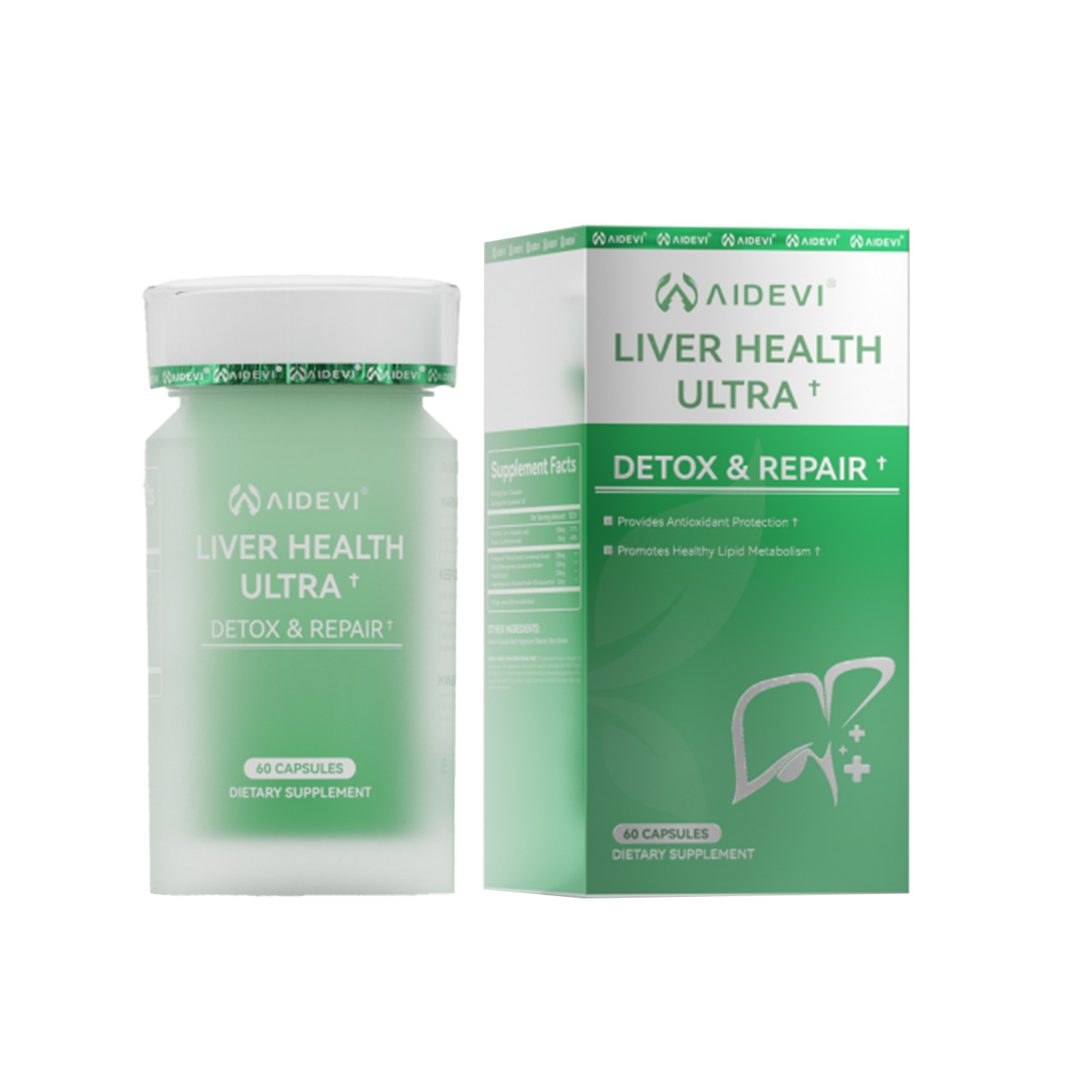
AIDEVI’s current Liver Health Ultra product page describes enteric-coated capsules and lists Cynamed® Artichoke Extract, Livervital Complex Blend, Rice Bran Fatty Alcohol, and Fucoxanthin. The page suggests one to two capsules daily with water, preferably with a meal, and identifies a 60-capsule bottle. The accessible product text does not show individual milligram amounts for those formula groups. [5]
That disclosure is useful when deciding what still needs confirmation: check the physical label or current product images for exact amounts before comparing the formula with a study. The presence of an ingredient on a product page is not itself evidence that the finished blend has been tested for a liver-related outcome. Follow the product’s current label and consult a qualified professional if you take medication or have a health condition.
Frequently asked questions
What is the best liver health supplement?
There is no universal best liver supplement. The right choice, if any, depends on the health question, ingredient evidence, label transparency, medication list, and clinician guidance. A “detox” claim alone is not evidence of benefit.
Does milk thistle help liver health?
Milk thistle is widely studied, but NCCIH says results for liver diseases have been conflicting or too limited to draw firm conclusions. It should not replace diagnosis or treatment for a liver condition. [2]
Can liver detox supplements cause side effects?
Yes. Side effects and interactions depend on the formula, and some concentrated herbal products have been associated with liver injury. Review the full label with a health professional, especially if you use prescription medication or have a liver condition. [1]
Should I take a supplement for abnormal liver test results?
Ask your health care professional to interpret the results and identify possible causes before adding a supplement. Do not use a liver health product as a substitute for follow-up testing or prescribed care.
References
- [1] Fontana RJ, et al. AASLD practice guidance on drug, herbal, and dietary supplement–induced liver injury. Hepatology. 2023.
- [2] National Center for Complementary and Integrative Health. Milk Thistle: Usefulness and Safety.
- [3] National Center for Complementary and Integrative Health. Turmeric: Usefulness and Safety.
- [4] U.S. Food and Drug Administration. FDA 101: Dietary Supplements.
- [5] AIDEVI. Liver Health Ultra product information, accessed November 2026.
These statements have not been evaluated by the Food and Drug Administration. This product is not intended to diagnose, treat, cure, or prevent any disease.
